Overview
The Government of Indonesia (“GOI”) recently enacted Presidential Regulation No. 109 of 2025 on Urban Waste Management through Environmentally Friendly Technology-Based Waste-to-Renewable Energy Processing (“PR 109/2025”), which revokes Presidential Regulation No. 35 of 2018 on the Acceleration of the Development of Environmentally Friendly Technology-Based Waste-to-Electricity Processing Installations.
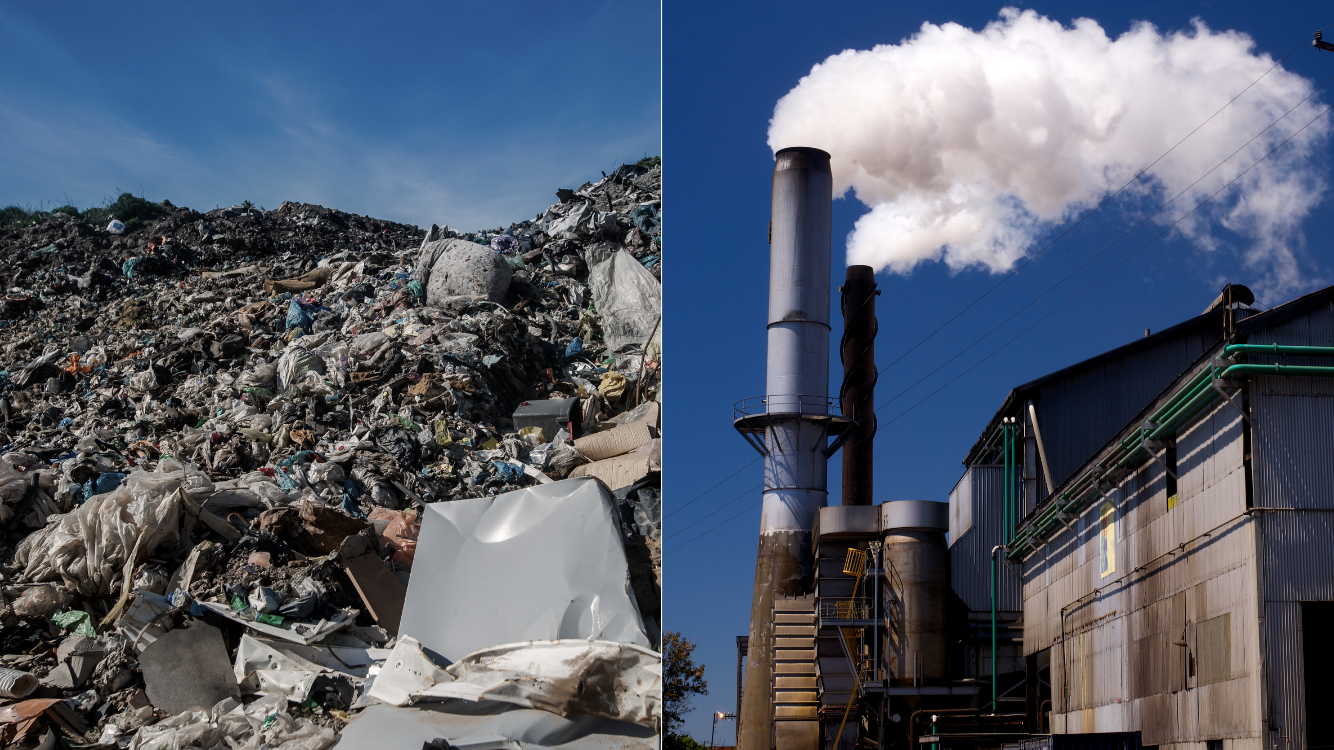
PR 109/2025 aims to address Indonesia’s waste management issues and promote the waste processing through machines and/or equipment capable of converting waste into electricity, bioenergy, renewable fuels, and other derivative products, as well as reducing waste volume (Environmentally Friendly Technology-Based Waste-to-Renewable Energy Processing, or Pengolahan Sampah menjadi Energi Terbarukan Berbasis Teknologi Ramah Lingkungan – “PSE”).
PR 109/2025 primarily governs PSE activities that produce electricity, known as PSE to Electricity (“PSEL”). Other PSE activities, namely PSE to Bioenergy, PSE to Renewable Fuels, and PSE to Other Derivative Products, will be further regulated by the minister responsible for energy affairs.
Some Key Provisions
- BPI Danantara: PR 109/2025 designates Badan Pengelola Investasi Daya Anagata Nusantara (“BPI Danantara”), through investment holding, operational holding, and/or state-owned companies (“BUMN”) and/or BUMN subsidiaries, to perform the following two key functions: (i) selecting the Development and Management Business Entity for PSEL (“BUPP PSEL”), and/or (ii) executing investments in PSEL projects that are commercially, financially, and risk-manageably feasible.
- PLN: PT PLN (Persero) is assigned to purchase electricity generated from PSEL facilities.
- PSEL Criteria: PSEL projects may be implemented in cities or regencies that meet the following criteria: (i) a guaranteed minimum waste supply of at least 1,000 tons per day during PSEL operations, (ii) availability of regional budget (APBD) allocations for waste collection and transportation to the PSEL site, (iii) availability of land for waste management and PSEL construction, and (iv) commitment to enacting regional regulations on sanitation service retribution.
- Land: The regional government shall provide the land to the BUPP PSEL on a borrow-and-use basis free of charge for the duration of the construction and operation of the PSEL. The land can be provided from: (i) the available waste processing facility, (ii) the extension of the available waste processing facility, and/or (iii) the provision of new land for the PSEL location.
- PSEL Implementation: The implementation of PSEL is conducted in two stages: (i) planning and (ii) execution. The planning stage includes: (i) the designation of city or regency, (ii) selection of the BUPP PSEL, (iii) cooperation agreement, (iv) pre-construction licenses, and (v) power purchase agreement (“PPA”). The execution stage includes: (i) construction, (ii) post-construction licenses, and (iii) operational.
- Designation of Cities or Regencies: To be designated for a PSEL project, regional governments must declare their readiness to the minister responsible for environmental affairs. If the relevant city or regency is selected to develop the PSEL, the minister shall submit the result to BPI Danantara as the basis for conducting technical and economic studies, as well as for selecting the BUPP PSEL.
- Selection of BUPP PSEL: Participants in the selection process for the BUPP PSEL must have: (i) proven and advanced environmentally friendly PSEL technology, (ii) sufficient financial capability, and (iii) experience in PSE projects. In certain circumstances (i.e., there is only one qualified participant, a declared waste emergency, and/or when a PSEL developer previously designated by the regional government before the enactment of PR 109/2025 has had its designation terminated with final and binding effect), direct appointment is permitted.
- Cooperation Agreement: The cooperation between the regional government and the selected BUPP PSEL shall be governed by a cooperation agreement, which shall include at least the following provisions: (i) availability of cost-free, borrow and use land, (ii) commitment to waste collection and transportation, (iii) the cooperation period, (iv) default provisions, (v) compensation for failure to meet the waste supply requirement, and (vi) post-cooperation asset status.
- Pre-Construction Licenses: The required licenses are processed through the Online Single Submission (“OSS”) system. Environmental approval, in the form of an environmental impact analysis (AMDAL), shall be issued within two months after the complete and accurate application is received by the OSS system. If the two-month period lapses without issuance, the approval shall automatically be deemed issued by the OSS system.
- PPA: PLN is required to sign the PPA within 10 working days after the BUPP PSEL fulfills the pre-construction licensing requirements. The PPA shall be valid for 30 years from the date the PSEL is declared commercially operational and shall be subject to the following: (i) the tariff is non-negotiable and not subject to escalation, (ii) the tariff applies once the PSEL has commenced commercial operations, (iii) the BUPP PSEL shall not be subject to take-and-pay penalties if it fails to deliver the contracted power due to technical issues beyond its control or, critically, due to an insufficient supply of waste from the regional government; and (iv) the PSEL shall be given priority for grid connection with PT PLN (Persero) in accordance with the annual contracted energy (must dispatch).
- Electricity Purchase Price: The electricity purchase price is set at USD 0.2 per kWh for all capacities and may be readjusted under certain circumstances. The price excludes the costs of electricity infrastructure provided by PT PLN (Persero).
- Construction and Licensing: The construction shall be carried out by the BUPP PSEL, and its progress must be periodically reported to the minister responsible for energy affairs. All licenses required during and after the construction phase shall be processed through the OSS system. The business license for the PSE operation shall serve as the license for electricity supply for public interest and will become effective upon the execution of the PPA.
- Operational: The PSEL shall commence commercial operation after: (i) obtaining an operational worthiness certificate, and (ii) execution of the minutes of commercial operation between the BUPP PSEL and PT PLN (Persero) for a 30-year operational period. During such period, the BUPP PSEL shall: (i) construct, operate, and maintain the PSEL facilities, (ii) sell electricity to PT PLN (Persero) in accordance with the PPA, and (iii) control environmental pollution and/or damage.
- Annual Report: During the PSEL operational implementation, the BUPP PSEL shall prepare annual reports consisting of: (i) a waste management report to be submitted to the minister responsible for environmental affairs, and (ii) a business operation report to be submitted to the minister responsible for energy affairs.
Closing
The regulation establishes a new legal framework for urban waste management through waste-to-renewable energy processing and introduces several structural changes to the national approach. It expands the scope of energy outputs from a primary focus on electricity to include bioenergy, renewable fuels, and other by-products. The regulation introduces new institutional arrangements, particularly the role of BPI Danantara, and delineates responsibilities among the central government, regional governments, and relevant ministries.
While this regulation marks a major step forward, its implementation will likely be a long-term process, and it remains to be seen how coordination challenges among the central government (including BPI Danantara), regional governments, and relevant ministries will be addressed and expedited to accelerate the development of waste-to-energy projects under this framework.
For more information or inquiries, please contact:
Andika Mendrofa at andika.mendrofa@nusaadvocates.com
Shanti Prameshwara at shanti.prameshwara@nusaadvocates.com
Sharon Solomon at sharon.solomon@nusaadvocates.com